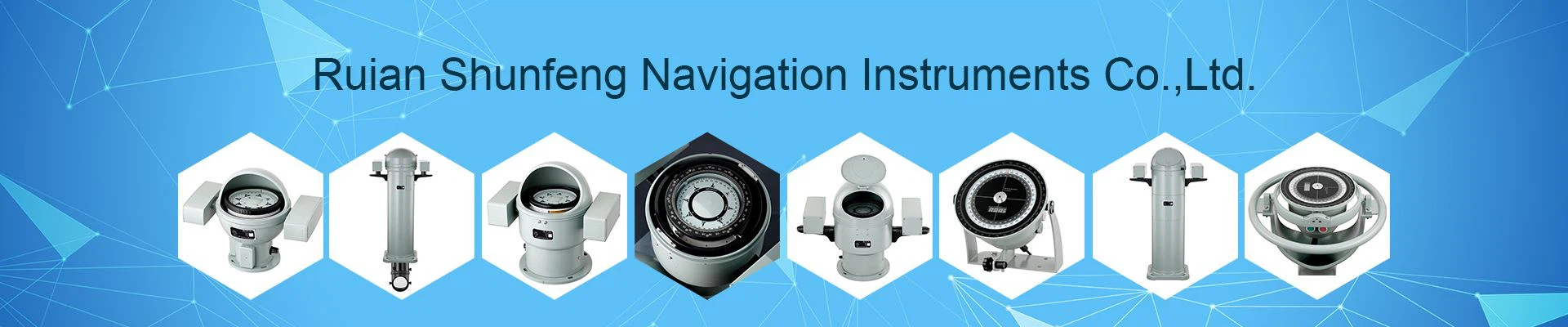
Quality products
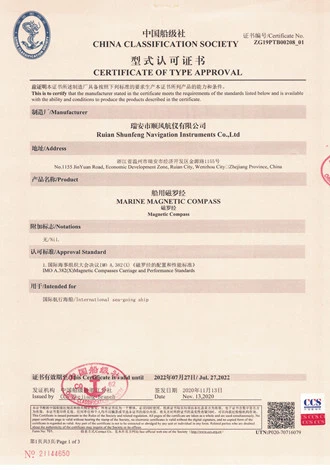
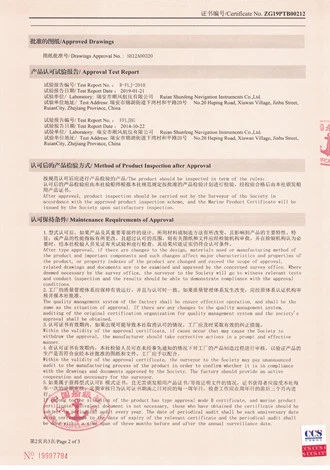
We have the most advanced production equipment, and our products are approved by China Classification Society and China fishing boat inspection bureau and obtain CCS and ZY type approval certificates.
Rich experience
Since its establishment in 1980, we have been widely recognized and highly praised by enterprises and consumers for our excellent quality and thoughtful service.
Reliable service
Our team is committed to providing reliable and consistent service, ensuring that you receive high-quality products and customer support from us every time.
Professional team
The company is in possession of numbers of senior engineers and has abundant technique power, well conditioned equipment and technology comes to perfection.
A repeater compass is a tool for finding direction. A simple compass is a magnetic needle mounted on a pivot, or short pin. The needle, which can spin freely, always points north. The pivot is attached to a compass card. The compass card is marked with the directions. To use a compass, a person lines up the needle with the marking for north. Then the person can figure out all the other directions. A repeater compass works because Earth is a huge magnet. A magnet has two main centers of force, called poles—one at each end. Lines of magnetic force connect these poles. Bits of metal near a magnet always arrange themselves along these lines. A compass needle acts like these bits of metal. It points north because it lines up with Earth's lines of magnetic force.

A repeater compass works by using the earth's magnetic field to determine direction. The earth's magnetic field is generated by the movement of molten iron in its core. This magnetic field is strongest at the north and south poles. When a compass needle is free to move, it will align itself with the earth's magnetic field, pointing towards magnetic north. The needle is magnetized, so it has a north pole and a south pole. The north pole of the needle is attracted to the south pole of the earth's magnetic field, which is located near the geographic north pole. This causes the needle to point towards magnetic north.
However, there is a difference between magnetic north and true north. Magnetic north is the direction indicated by a compass, while true north is the direction to the geographic north pole. This difference is called magnetic declination, and it varies depending on where you are in the world. In order to use a compass for navigation, you must account for magnetic declination by adjusting your compass readings.
Simplicity and ease of use
Repeater compass surveying is relatively simple. It doesn't require complex equipment or advanced training, making it accessible to individuals with basic surveying knowledge.
Cost effectiveness
Compared to modern surveying techniques that involve sophisticated instruments, compass surveying is cost-effective. The compass itself is an affordable tool, and the method doesn't demand high-tech equipment or software.

Suitable for small-scale projects
Compass surveying is well-suited for small-scale projects, such as creating preliminary surveys or assessing rough boundaries. Its simplicity makes it efficient for quick assessments.
Rough direction determination
Repeater compass provide a quick and basic means of determining directions. In situations where precise measurements aren't essential, compass surveying can be sufficient.
The repeater compass has been used for navigation for hundreds of years. At one time, it was the only reliable means of direction-finding on days when the sun and stars were not visible. Nowadays, sophisticated equipment is available that enables users to determine bearings accurately and to pinpoint locations to within a few metres. However, such equipment has not made the compass obsolete. It is still a very practical tool for navigation for many small craft and for people on foot. Even airplanes and ships equipped with more sophisticated equipment often carry compasses as backups.
Compasses come in a variety of shapes and sizes depending on their intended use. The type of compass used on a ship or aircraft is a complex electronic or mechanical device capable of compensating for both the motion of the craft and its metallic structure. At the other extreme are small pocket compasses of low precision intended for casual use.
Regardless of their intended purpose or the complexity of their construction, most mechanical compasses operate on the same basic principle. A small, elongated, permanently magnetized needle is placed on a pivot so that it may rotate freely in the horizontal plane. The Earth's magnetic field exerts a force on the compass needle, causing it to rotate until it comes to rest in the same horizontal direction as the magnetic field. Over much of the Earth, this direction is roughly true north, which accounts for the compass's importance for navigation.

The horizontal force of the magnetic field, responsible for the direction in which a compass needle is oriented, decreases in strength as one approaches the North Magnetic Pole, where it is zero. Close to the pole, an area is reached where the frictional forces in the pivot are comparable to the horizontal forces of the magnetic field. The compass starts to behave erratically when the horizontal force falls below 6000 nT, and eventually, as the horizontal force decreases to less than 3000 nT, the compass becomes unusable.
These definitions are only guidelines, and experience has shown that with care, high quality mechanical compasses can be used, even in areas where the horizontal force is less than 3000 nT. Electronic compasses will operate regardless of the horizontal field strength. However, both mechanical and electronic compasses are subject to another problem within the area of compass unreliability - daily fluctuations in magnetic declination become increasingly large as one approaches the North Magnetic Pole. Where the horizontal force is less than 3000 nT, daily fluctuations in excess of 5 degrees are normal. Therefore, even if you compass is functioning correctly it may not be pointing where you think it is.
Navigating by repeater compass requires determining bearings with respect to true or grid north (in the following we will assume grid north) from a map sheet and converting them to magnetic bearings for use with a compass. One way of doing this is given in the following steps.
1. Place the repeater compass on the map with the direction-of-travel arrow pointing along the desired line of travel.
2. Rotate the compass dial so that the parallel lines within the capsule line up with the grid lines on the map. Convert the grid bearing to a magnetic bearing using the information given on the map sheet. Adjust the dial to read the value of the magnetic bearing opposite the direction of travel arrow.
3. Now pick up and rotate the whole compass until the red end of the needle points to the north marker on the dial. The direction-of-travel arrow on the compass card will point to your destination. Choose a landmark in that direction and walk towards it.
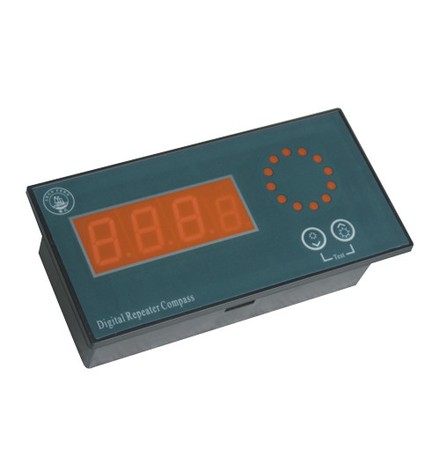
● North America is expected to be the largest market for Repeater Compass Market during the forecast period, accounting for over 30% of the market share in 2023. The growth of the market in North America is attributed to the strong presence of recreational boating and maritime tourism industry and increasing defense spending by the US government.
● The Asia Pacific market is expected to be the second-largest market for Repeater Compass Market, accounting for over 35% of the market share in 2023. The growth of the market in is attributed to the rapidly growing shipbuilding industry and increasing seaborne trade in the region.
● The Europe market is expected to be the fastest-growing market for Repeater Compass Market, with a CAGR of over 25% during the forecast period. The growth of the market in Europe is attributed to the increasing adoption of advanced navigation systems in luxury yachts and recreational boats.
Increasing maritime tourism and recreational boating activities
The growth in maritime tourism and recreational boating is a major factor driving the repeater compass market. With rising disposable incomes and leisure travel, activities like yachting, boating, cruising, and sailing have gained immense popularity. This has increased the installation of navigation systems including repeater compasses on leisure boats and passenger ships. Advanced repeater compasses provide heading data on multiple displays for convenience and safety. Their adoption is increasing significantly with growth in luxury boats and cruise liners.
Rising seaborne trade and focus on cargo freight efficiency
The growing volume and value of seaborne trade is contributing to the increasing utilization of repeater compasses. According to unctad, the operation of merchant ships contributes over 80% of global trade volume. Rising exports and focus on improving navigation and safety of cargo ships is driving the adoption of advanced instruments like gyrocompasses.

Surging development of autonomous ships and vessels
The accelerating work on developing autonomous and unmanned vessels is boosting the repeater compass market potential. Autonomous ship systems require inputs from multiple reliable sensors, cameras, and navigational tools for situational analysis and decision making. This has led developers to integrate repeater compasses for their autonomous controllers to enhance precision and reliability. Regulatory bodies are also encouraging the adoption of advanced systems like gyrocompasses for safer autonomous operations.
Increased spending on naval and airborne forces
Rising defense spending by governments to strengthen their naval, airborne, and maritime security capabilities is fueling the adoption of sophisticated navigation systems including repeater compasses. Modern warfare technology relies on integrating data from diverse sensors and navigation tools. Compact and durable repeater compasses are increasingly being deployed on naval ships, unmanned vessels, helicopters, and aircraft for tactical coordination and fleet management.
Development of hybrid navigation systems
Hybrid navigation technology that combines satellite navigation systems like GPS with conventional tools like compasses has promising growth opportunities. Hybrid systems leverage the strengths of multiple sensors for better accuracy and robustness. For example, integrating repeater compasses with GPS enables heading stabilization and correction of GPS positional errors using gyrocompassing. Such systems overcome standalone limitations and gains adoption for marine applications.
Emergence of smartboat and IOT trends
The integration of smart technologies and internet of things in the marine industry provides opportunities for growth of advanced instruments like digital repeater compasses. Iot connectivity allows repeater compass data to be monitored through mobile apps and enables features like gps pairing. Smart repeater compasses can communicate navigation data to various onboard systems in real-time for automation and monitoring. Their application in smart boats and ships will consequently rise.
Growing deployment of vessel monitoring systems
The increasing installation of vessel monitoring systems and fleet management systems by ship operators, maritime authorities and defense organizations is creating demand for repeater compasses. Multi-sensor systems like VMS require heading data from reliable repeater compasses for tracking, geo-fencing, analytics and ensuring adherence to navigational rules and protocols. Their application in VMS networks will rise significantly.
Development of advanced gyrocompassing technology
The advances in gyrocompassing technology presents opportunities for repeater compass systems that integrate them. Marine gyrocompasses enabled by fiber optic sensors and mems deliver very accurate and reliable heading data, even in rough sea conditions. This helps overcome limitations of traditional magnetic compasses. Integration of advanced gyrocompasses as master units in repeater systems enhances their functionality and adoption.
All our products are approved by China Classification Society and China fishing boat inspection bureau and obtain CCS and ZY type approval certificates. Our company has been found to conform to Quality Management System standard ISO 9001:2000 approved by China Classification Society Quality Assurance (CSQA).




Q: How does repeater compass work?
Q: What can affect a compass?
Q: Which of the following factors can affect the accuracy of a magnetic compass?
Q: What causes a compass to move?
Q: What are the main errors of magnetic compasses?
Q: What keeps a compass accurate?
Q: What is a compass short answer?
Q: What is a repeater compass and what did it do?
Q: What is a repeater compass example?
Q: What is the best definition of repeater compass?
Q: Why is the repeater compass so important?
Q: What is special about the repeater compass?
Q: Is repeater compass still used today?
Q: Can a repeater compass tell you where you are?
Q: Can a magnet be a repeater compass?
Q: Is repeater compass magnetic or true?
Q: How did the compass impact people?
Q: What is the significance of the repeater compass when reading the ship's heading?
Q: Why do repeater compass only point north?
Q: What is the main point of a repeater compass called?
Q: How does repeater compass work?
Q: What can affect a compass?
Q: Which of the following factors can affect the accuracy of a magnetic compass?
Q: What causes a compass to move?
Q: What are the main errors of magnetic compasses?
Q: What keeps a compass accurate?
Q: What is a compass short answer?
Q: What is a repeater compass and what did it do?
Q: What is a repeater compass example?
Q: What is the best definition of repeater compass?
Q: Why is the repeater compass so important?
Q: What is special about the repeater compass?
Q: Is repeater compass still used today?
Q: Can a repeater compass tell you where you are?
Q: Can a magnet be a repeater compass?
Q: Is repeater compass magnetic or true?
Q: How did the compass impact people?
Q: What is the significance of the repeater compass when reading the ship's heading?
Q: Why do repeater compass only point north?
Q: What is the main point of a repeater compass called?
with over 35 years' experience, we are one of the leading repeater compass manufacturers and also a professional supplier in China. Welcome to wholesale our quality and steady repeater compass. Competitive price and excellent service are available.
, steering repeater , Digital Repeater Compass , bearing repeater compass(0/10)



